Import-Export Code (IEC) Registration
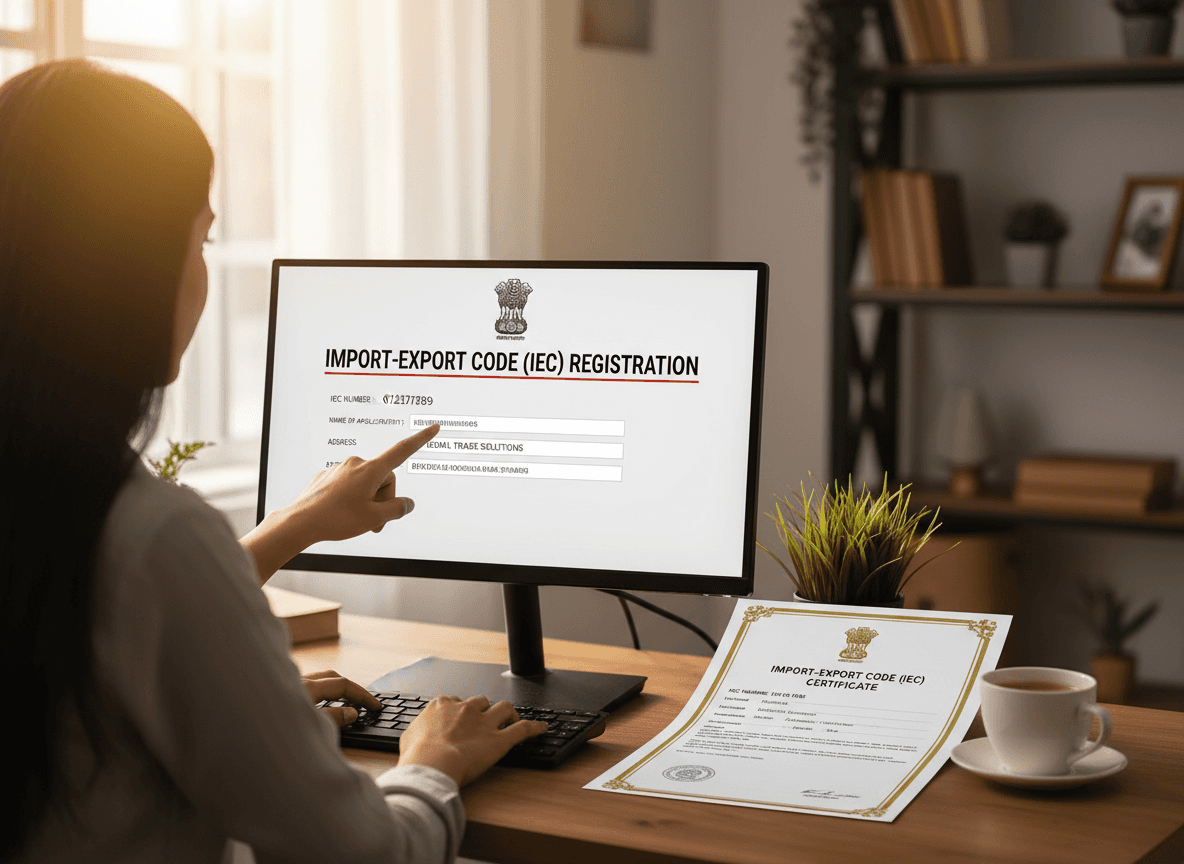
Introduction to IEC Registration
Import–Export Code (IEC) Registration is one of the foundational business licenses required for any entity planning to conduct international trade. Whether a business wants to import goods for manufacturing, trading, or personal consumption, or export products to global markets, an IEC number becomes an unavoidable legal requirement. It acts as an official identification code issued by the Directorate General of Foreign Trade (DGFT), enabling customs documentation, foreign bank remittances, shipment clearance, and international trade compliance.
IEC is not just a legal formality it is a gateway to worldwide business opportunities. With global markets expanding rapidly and Indian exporters receiving strong demand overseas, IEC registration plays a vital role in connecting Indian businesses to international supply chains. A company without an IEC number cannot clear goods through customs, receive export incentives, or participate in cross-border transactions through the banking system. This makes IEC the first and most essential registration before attempting to enter the global marketplace.
In today’s business environment, global trade is no longer restricted to large corporations. Even small e-commerce sellers, home-based manufacturers, freelancers, and traders are exporting their products and services worldwide. Platforms like Amazon Global, Alibaba, Etsy, and independent marketplaces have opened direct paths for Indian sellers to reach global customers. For all such operations, IEC registration works as the official passport for international business transactions.
What Exactly is IEC and Why It Matters
IEC is a ten-digit code that functions as a unique identification number for importers and exporters. Once issued, this code remains valid for a lifetime and does not require annual renewal. It is recorded in customs databases, banks, and DGFT systems, ensuring seamless transactions between the business and international authorities.
The importance of IEC goes beyond compliance. It also builds business credibility, supports financial transparency, and helps companies take advantage of several government schemes and export incentives. Schemes like RoDTEP, RoSCTL, MEIS/SEIS (where applicable), export credit support, duty refunds, and logistic subsidies are more accessible when the business holds a valid IEC.
Additionally, IEC offers a structured identity to the business in front of foreign buyers, banks, and customs departments. When international buyers verify supplier credentials, IEC is one of the first documents they request. This helps businesses gain trust, attract large orders, collaborate with global distributors, and negotiate better pricing terms.
Why Businesses Need IEC Registration
International trade involves multiple layers of compliance, including customs law, foreign exchange law, GST regulations, import policies, and export documentation rules. IEC acts as the key document that links all these layers together. Without IEC, a business cannot:
• Clear imported goods from Indian customs
• Ship export consignments to foreign destinations
• Receive foreign currency from international buyers
• Send payment abroad to purchase goods or raw materials
• Avail export incentive schemes
• Register on international Trade Portals
• Participate in international exhibitions and trade fairs
• Build partnerships with overseas distributors or suppliers
Thus, IEC is not merely “helpful” it is completely mandatory for legal import-export activities.
Detailed Benefits of IEC Registration
(Global-level depth, marketing-friendly language)
• Authorization for International Trade:
IEC gives official permission to engage in import and export activities, recognized by Indian and international authorities.
• Customs Clearance:
IEC is verified during every import/export transaction at ports, airports, and border checkpoints.
• Banking Transactions:
Banks require IEC to process foreign payments, letter of credits, international transfers, and export proceeds.
• Government Schemes & Incentives:
Businesses can claim refunds, duty exemptions, and incentives such as RoDTEP and SEIS.
• Global Market Access:
IEC helps Indian products expand into global markets, reaching customers worldwide.
• Lifetime Validity:
No renewal, no annual maintenance, no compliance filings — once issued, it stays valid forever.
• Boost to Business Identity:
Enhances brand trust, making international buyers more confident in dealing with the business.
• Ease of International Shipping:
Courier companies, freight forwarders, and shipping agents require IEC for export consignments.
• Support for E-Commerce Exporters:
Essential for Amazon Global, Etsy, Alibaba, Walmart Global, and other cross-border marketplaces.
Who Must Obtain IEC Registration?
This section covers all categories in detail so any business can easily understand whether it applies to them.
• Manufacturers importing machinery, tools, or components
• Wholesalers and traders involved in imports or exports
• E-commerce exporters using digital platforms
• Amazon, Meesho, Flipkart, Etsy, and eBay sellers exporting overseas
• Service exporters (IT, consultancy, freelancing, designing, etc.)
• Businesses planning to import goods for resale
• Export houses, merchant exporters, manufacturer exporters
• Individuals doing part-time import-export business
• Business entities seeking global suppliers or buyers
Even if the business is not currently importing or exporting, obtaining IEC early saves time later.
Documents Required for IEC Registration
A detailed explanation for each:
• PAN Card: Mandatory for individual or business identity verification
• Aadhaar Card: Identity and address authentication
• Business Registration Proof: GST certificate, partnership deed, or incorporation documents
• Address Proof: Electricity bill, rent agreement, or ownership document
• Bank Details: Cancelled cheque or bank certificate
• Photograph: Passport size photo for individual or proprietor
The documentation is minimal and easy to arrange, enabling faster registration processing.
Step-by-Step IEC Registration Process
A long, user-friendly explanation for maximum clarity:
• Step 1 – Consultation & Guidance
We understand your business model, the type of products involved, and future plans.
• Step 2 – Document Collection
We gather PAN, Aadhaar, business proofs, bank info, and prepare them for submission.
• Step 3 – Filing the DGFT Application
Our team creates your DGFT account and fills all the technical details accurately.
• Step 4 – Digital Verification
OTP-based Aadhaar authentication or DSC signing for verification.
• Step 5 – Government Fee Payment
Submission of statutory fee directly on the DGFT portal.
• Step 6 – Final Scrutiny by DGFT
The department checks documentation and application correctness.
• Step 7 – IEC Issuance
Once approved, the 10-digit IEC certificate is generated and delivered online.
The entire process usually takes 1–3 working days, depending on document correctness.
How We Help in IEC Registration
This section explains your company’s value proposition in a professional, marketing-focused tone.
• Complete document preparation
• Accurate DGFT portal filing
• Fast processing with minimal delays
• Dedicated support for all international trade queries
• Error-free documentation management
• Guaranteed guidance until certificate approval
• Post-registration support for linking, modifications, and future compliance
• Assistance in export-import strategy for new businesses
We ensure that clients can focus on growing their import-export business without worrying about paperwork or compliance obstacles.
When IEC is Mandatory vs. Optional
A very detailed section to help businesses understand applicability:
Mandatory When:
→ Importing goods commercially
→ Exporting goods or services
→ Receiving foreign money
→ Sending money abroad for trade
→ Clearing goods through customs
Optional When:
→ Exporting items under personal baggage
→ Importing items for personal use (non-commercial)
→ Government departments performing non-trade related imports
This clarity helps avoid confusion for new traders in the import-export industry.
Post-Registration Services (Add-On Support)
You can offer these as premium add-ons:
• IEC modification/update
• Linking IEC with GST
• Export documentation assistance
• Import compliance consultation
• HS code classification support
• Guidance for international shipping and logistics
• Export subsidy/benefit guidance
These additional services make your business a complete solution provider.
Why Choose Us for IEC Registration?
A detailed trust-building section:
• Expertise in DGFT compliance
• Quick and smooth application experience
• Transparent pricing without hidden charges
• Lifetime support
• Document accuracy checks
• Dedicated relationship manager
• Support for both individuals and businesses
• In-depth understanding of international trade rules