Battery Waste EPR Registration
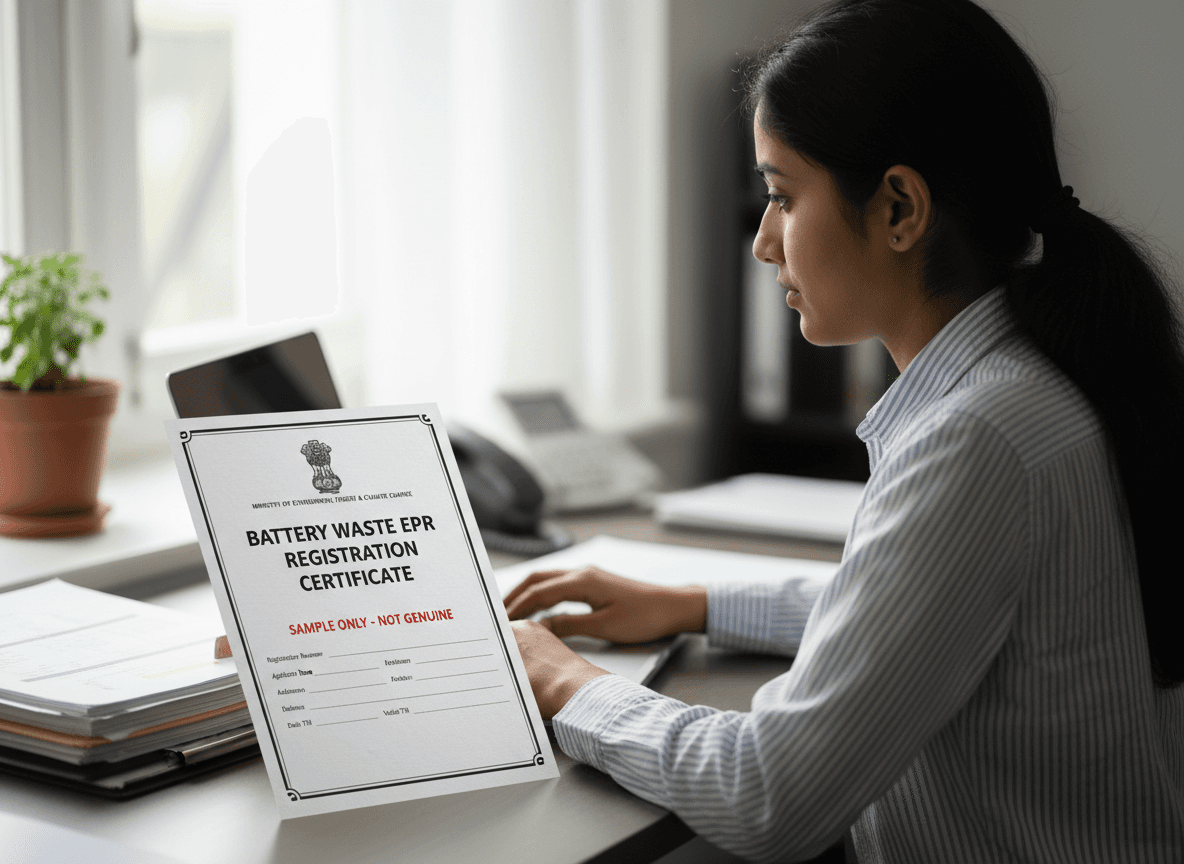
What Is Battery Waste EPR Registration
Battery Waste EPR Registration is a government-issued authorization that allows a business to legally place batteries on the Indian market while accepting full Extended Producer Responsibility obligation. This certificate ensures that the company has declared its annual production/import quantity, created a structured recycling plan, partnered with authorized recyclers, and committed to achieving yearly EPR targets based on the total volume of batteries introduced into the marketplace. Battery Waste EPR Registration is compulsory for producers, importers, OEMs, battery brands, EV companies, inverter manufacturers, portable battery sellers, and any business that sells battery-powered products. Without this registration, battery-related businesses cannot operate legally, and non-compliance can result in financial penalties, cancellation of business approvals, and environmental compensation charges.
Why Battery Waste EPR Registration Is Important
Battery Waste EPR Registration is essential because batteries contain hazardous chemicals such as mercury, lead, cadmium, lithium, nickel, manganese, and various toxic electrolytes that can contaminate soil, groundwater, crops, and living organisms. Proper collection and recycling prevent harmful pollution, save natural resources, promote sustainable circular economy, and reduce pressure on virgin mining activities. Battery EPR also builds trust with regulators, ensures legal continuity, eliminates compliance-related risks, and strengthens brand reputation by demonstrating environmental responsibility. Customers today prefer companies that follow sustainable waste management practices, and Battery Waste EPR compliance enhances public image. For organizations planning long-term manufacturing, expansion, government projects, exports, or collaborations with larger corporations, Battery EPR authorization is a critical requirement for environmental due diligence, ESG reporting, and partner-level compliance audits.
Types Of Batteries Covered Under Battery Waste EPR
• Portable Batteries
• Automotive Batteries
• Industrial Batteries
• EV Batteries
• Lithium-ion Batteries
• Lead-acid Batteries
• Nickel-based Batteries
• Button Cells
• UPS / Inverter Batteries
• Power-tool Batteries
• Emergency Device Batteries
• Telecom Tower Batteries
• Solar Storage Batteries
• Medical Equipment Batteries
• Consumer Gadget Batteries
• Smart Device Batteries
• Wearable Batteries
Who Needs Battery Waste EPR Registration
• Battery Manufacturers
• Battery Importers
• Battery Brand Owners
• EV Manufacturers
• Electric Cycle / Scooter / Bike Companies
• Electronics Importers Whose Products Contain Batteries
• Mobile, Laptop, Tablet, and Gadget Importers
• Inverter Manufacturers and Sellers
• UPS and Power-Backup Companies
• Medical Device Importers
• Solar Equipment Importers
• Industrial Machine Importers
• Large OEMs Supplying Batteries to Other Companies
• Amazon / Flipkart Sellers Importing Battery Products
• E-commerce Private Labels
• Assembly Units That Import Battery Cells Or Packs
Mandatory Requirements Under Battery Waste EPR
• Digital reporting of yearly battery quantities
• Quarterly collection and recycling data submission
• Mandatory tie-up with authorized recyclers
• Fulfillment of annual EPR targets
• Collection centers / reverse logistics setup
• Batch-wise traceability of battery waste
• Maintenance of recycling certificates from recyclers
• Proper labeling and battery marking requirements
• Transport and storage compliance for waste batteries
• Ensuring recycling meets material recovery benchmarks
Detailed Understanding Of The EPR Target System
Target system sabse important part hota hai Battery Waste EPR ka.
Every company receives a fixed recycling target based on the total quantity of batteries they introduce into the marketplace. This target is calculated by determining the total mass of batteries placed in the market during the previous years and applying a percentage-based target that increases year by year.
Targets are divided into multiple layers:
• Annual declared battery quantity
• Percentage-based yearly compliance obligation
• Recycling volume commitments
• Material recovery benchmarks
• Long-term collection and channel development metrics
The EPR target increases progressively to ensure that companies continuously improve their recycling and waste management systems. Electric vehicle batteries, lithium-ion batteries, and industrial batteries have some of the highest recycling targets because of their hazardous content, energy density, and long-term environmental impact.
Documents Required For Battery Waste EPR Registration
• Company PAN
• Company GST
• Incorporation documents
• Authorized signatory details
• Board resolution or authorization letter
• Detailed product list
• Battery type confirmation
• Battery chemistry details
• Mass of batteries introduced
• Previous year production or import data
• IEC certificate (for importers)
• BIS certificate (if applicable)
• HSN codes for products
• Product images and packaging details
• Labelling confirmation
• Authorized recycler agreements
• Recycling plan
• Collection mechanism explanation
• Environmental management commitments
• Digital signature certificate
Step-By-Step Process Of Battery Waste EPR Registration
• Detailed data assessment
• Battery classification
• Import or manufacturing volume analysis
• EPR target calculation
• Compliance roadmap design
• Preparation of documentation set
• Collecting recycler agreements
• Creating reverse logistics plan
• Digital portal account setup
• Application form filing
• Data mapping and framework uploading
• Submission of technical details
• Compliance plan approval
• Government scrutiny phase
• Clarification handling
• EPR authorization issuance
How The EPR Recycling Ecosystem Works
The Battery EPR ecosystem consists of producers, recyclers, collection agencies, dismantlers, transporters, and government monitoring systems. The primary responsibility lies with the producer, who must create a network that ensures smooth battery return flow from end-users to authorized recycling facilities.
• Consumers deposit used batteries
• Collection centers gather waste batteries
• Transporters deliver waste to recyclers
• Dismantlers segregate components
• Recyclers extract recoverable materials
• Recovered raw materials re-enter manufacturing
• Detailed recycling certificates are issued
• Producer submits quarterly and annual compliance reports
This loop ensures sustainability and prevents environmental damage.
Common Mistakes Businesses Make During Battery EPR
• Incorrect classification of battery types
• Wrong import or production quantity declaration
• Missing recycler agreements
• Submitting incomplete documentation
• Not maintaining quarter-wise records
• Ignoring material recovery benchmarks
• Delayed reporting
• Mis-calculated EPR targets
• Improper reverse logistics explanation
• Using unauthorized waste handlers
• Incomplete recycling proof
Penalties For Non-Compliance
• Heavy environmental compensation charges
• Cancellation of environmental approval
• Restrictions on imports
• Seizure of products
• Business operations suspension
• Legal action under environmental laws
• Public disclosure of non-compliance
• Financial loss due to halted supply chain
• Reputational damage
How Mannat Manages The Entire Battery EPR Compliance
• End-to-end registration support
• Full documentation preparation
• Battery quantity and category analysis
• Recycling target calculation
• Authorized recycler onboarding
• Waste channel development
• Reverse logistics strategy
• Portal filing and approval handling
• Quarterly compliance management
• Recycling certificate verification
• 100 percent annual target fulfillment planning
Mannat’s Complete Workflow For Battery Waste EPR
• Understanding client business model
• Identifying battery usage pattern
• Mapping manufacturing or import cycle
• Designing responsibility distribution
• Creating material flow network
• Selecting certified recyclers
• Setting up collection points
• Ensuring legal transport chain
• Managing portal submissions
• Preparing compliance reports
• Conducting gap analysis
• Ensuring long-term sustainability